What is Kubernetes Ingress?
-
Published on 07 Jan 2026
-
Last updated 10 Apr 2026
-
Reading Time 10 minutes
-
Written By Can Şentay
What is Kubernetes Ingress?
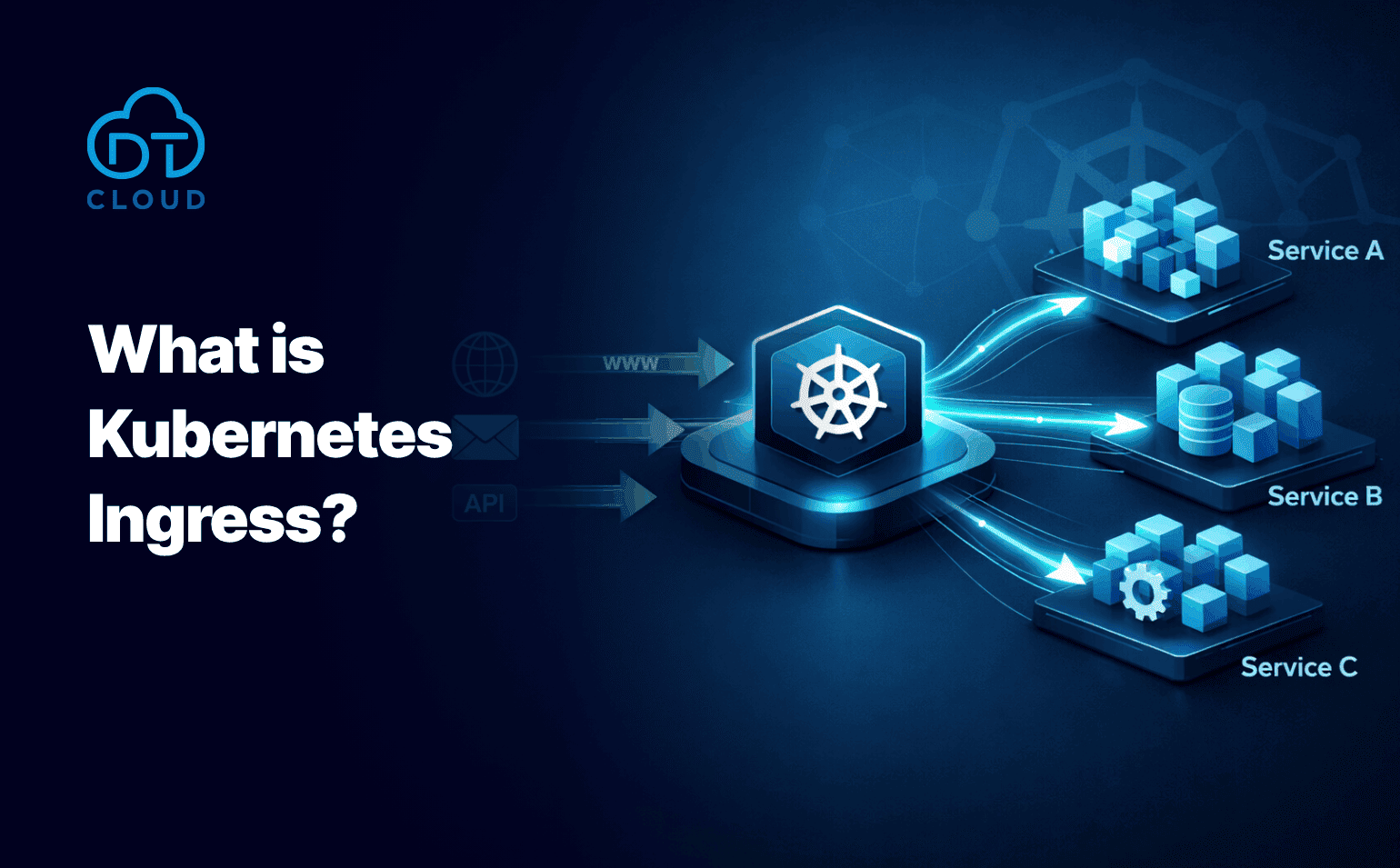
When you want to route traffic from outside your Kubernetes cluster to the applications inside it, Ingress comes into play. Ingress is a Kubernetes resource that allows us to manage HTTP and HTTPS traffic. To put it more simply, it acts like a traffic controller that directs incoming requests to the services we define inside the cluster. Compared to other methods such as NodePort and LoadBalancer, it is a more flexible, secure, and manageable solution.
Ingress enables you to manage your applications professionally using advanced features such as domain-based routing, SSL/TLS termination, and path-based routing for multiple services over a single IP address. Especially in microservices architectures, accessing different services through a single entry point provides significant advantages in terms of both security and cost.
-
What is an Ingress Controller and how does it work?
In our Kubernetes cluster, defining an Ingress alone is not sufficient. Just like in real life, we also need an authority that supervises and directs the traffic controllers—in other words, an Ingress Controller such as Traefik, HAProxy, or NGINX.
The Ingress Controller continuously watches the Kubernetes API and, when you create a new Ingress resource, it automatically detects it, updates its own configuration files, and starts managing traffic according to the new rules.
You can deploy an Ingress Controller to your Kubernetes cluster using Helm charts or manually through manifest files. After installation, the Ingress Controller must be exposed to the external world via a LoadBalancer or NodePort service to enable traffic routing.
-
Basic Ingress Configuration and Alternative Approaches
Let’s start with a basic Ingress resource configuration:
apiVersion: networking.k8s.io/v1
kind: Ingress
metadata:
  name: simple-ingress
  annotations:
spec:
  ingressClassName:
  rules:
  - host: uygulama.example.com
    http:
      paths:
      - path: /
        pathType: Prefix
        backend:
          service:
          name: frontend-service
          port:
            number: 80
In this configuration, all requests coming to
application.example.comare routed to thefrontend-service, and when you usepathTypeas Prefix, all requests that start with the specified path will be matched.
If we had used
Exactinstead of Prefix, we would have achieved an exact match.
In Kubernetes 1.19 and later versions, the
spec.ingressClassNamefield is used to specify which Ingress Controller should manage Ingress resources. In short, this defines “who is responsible for controlling this traffic.”The annotations section is used to modify the behavior of the Ingress Controller. You can manage features such as URL rewriting, timeout settings, and rate limiting through annotations. However, each Ingress Controller supports different annotations, so before making any changes or additions, you should always check the official documentation of the controller you are using.
-
Path-based and Host-based Routing
One of the powerful features of Ingress is its ability to route traffic based on different paths and hosts defined in the configuration. In the example below, you can route requests under the same domain—those coming to the
/apipath to your backend service, and those coming to the/webpath to your frontend service:apiVersion: networking.k8s.io/v1 kind: Ingress metadata: name: coklu-path-ingress annotations: spec: ingressClassName: rules: - host: example.com http: paths: - path: /api pathType: Prefix backend: service: name: api-service port: number: 8080 - path: /web pathType: Prefix backend: service: name: web-service port: number: 3000Host-based routing allows you to use different services for separate subdomains (such as
api.example.comandadmin.example.com). This approach is especially useful in multi-tenant applications. -
SSL/TLS Termination and Certificate Management
You can manage SSL/TLS certificates to handle HTTPS traffic with an Ingress Controller by creating them inside your Kubernetes cluster using a Secret object, or by using tools like cert-manager to automatically obtain and manage certificates from Let’s Encrypt:
apiVersion: networking.k8s.io/v1 kind: Ingress metadata: name: guvenli-ingress annotations: cert-manager.io/cluster-issuer: "letsencrypt-prod" spec: tls: - hosts: - guvenli.example.com secretName: guvenli-tls-secret rules: - host: guvenli.example.com http: paths: - path: / pathType: Prefix backend: service: name: uygulama-service port: number: 443 -
Conclusion
In Kubernetes clusters, the combination of Ingress and Ingress Controller provides a powerful and flexible solution for accessing multiple services from a single entry point, routing traffic based on domain or path, and managing HTTP/HTTPS traffic.
By choosing an Ingress Controller such as NGINX, Traefik, or HAProxy, you can achieve a more manageable and cost-effective architecture compared to NodePort or LoadBalancer approaches.
Related Articles
-
 Mar 22,2024
DT Cloud Has Joined GAIA-X - European Union Federated and Secure Data Infrastructure Association
Türkiye ve dünyada farklı lokasyonlarda hizmet veren uluslararası alternatif bir bulut platformu sağlayıcısı Digital Transformation Group, bulut altyapısı DT Cloud ile Avrupa Birliği veri ve altyapı girişimi Gaia-X’e dahil oldu. Avrupa'da da yürütmekte olduğu faaliyetlerini güçlendirmek amaçlı bu adım ile DT Cloud, öncelikle Türkiye'de çalışan ulusal ve uluslararası kurum ve kuruluşların, Avrupa Birliği veri ve bulut regülasyonlarına tam uyumlu şekilde Avrupa'ya açılmasını, veri ve bulut çalışmalarını Avrupa'da güçlendirmeyi hedefliyor.
Learn More -
 Feb 21,2023
Introducing DT Cloud’s new logo
We are excited to announce that we are rebranding with a new logo and color scheme as part of the ongoing transformation of our company’s brand. We felt it was time for a change as our company grew and evolved over the years. We have refreshed our brand to reflect our journey until today and we are excited for the new opportunities the future will bring.
Learn More -
 Jan 30,2026
What is Metro Ethernet?
Metro Ethernet is a dedicated, enterprise-grade internet infrastructure offered especially for individuals and businesses that ...
Learn More

-
Subscribe to our newsletter to be informed about innovations in the cloud world.
